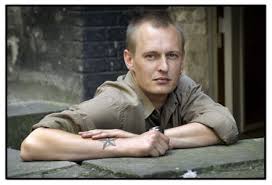
Jakob Ejersbo is a writer who died young. He succumbed to cancer at 40, having published a volume of short stories and a novel, Nordkraft, which won the 2003 Golden Laurel Prize. But more importantly, it was hailed by critics and readers alike as a great new Danish novel, ushering in a new type of fiction that would draw a line under the minimalism and symbolism that had prevailed in Danish literature during the late 1990s.
A gritty, realistic tale about disaffected youth in Aalborg, Denmark’s fourth largest city, it captured the Danes’ imaginations, holding a mirror to their society and rendering them as they saw themselves.
It was the last book Ejersbo would live to publish. He died in July 2008, just 10 months after being diagnosed with cancer. Throughout his illness, Ejersbo strove to complete his latest project, an ambitious trilogy about the relationship between the West and the Third World. Shortly after his death, his publisher, Johannes Riis, literary director at Gyldendal, revealed that he had left behind a manuscript and that it was virtually finished.