
The Ninth

ABOUT
THE BOOK
Set in a sleepy village north of Budapest in 1968, this touching, unsettling novel paints a richly wrought portrait of life in Hungary under Communism through the story of one insightful nine-year-old boy. The narrator is the ninth child in a family distinguished by its size, poverty, faith, and abundance of physical and psychological disabilities. Humiliated and abused by other boys, plagued by difficulties learning and speaking, and estranged from his family, the narrator attempts to express his yearning for things he cannot have and only sometimes understands. His sense of confusion is only exacerbated by the strict, secretive, Catholic household his parents keep in the face of the Communist government. The dual forces of guilt and desire propel him toward a fateful, beautifully rendered realization.

ABOUT
THE TRANSLATOR Paul
Olchváry
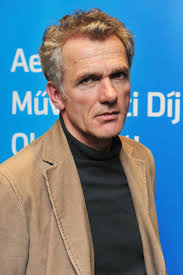
Paul Olchváry (1965-2024) was a well renowned translator. Paul translated many books for leading publishers, including József Debreczeni’s Cold Crematorium, György Dragomán’s The White King, Vilmos Kondor’s Budapest Noir, and Károly Pap’s Azarel. He received translation awards from the National Endowment for the Arts, PEN America, and Hungary’s Milán Füst Foundation. His shorter translations have appeared in the Paris Review, New York Times Magazine, Kenyon Review, Tablet, AGNI, and Guernica. Born and raised in a Hungarian family in the United States, mostly near Buffalo, New York, Olchváry went on to earn an MA in writing from Indiana University, Bloomington, and then spent much of his younger adulthood in Hungary. A former senior copywriter at Princeton University Press, he was the publisher of New Europe Books and the editor-in-chief of Hungarian Cultural Studies.
Paul Olchváry (1965-2024) was a well renowned translator. Paul translated many books for leading publishers, including József Debreczeni’s Cold Crematorium, György Dragomán’s The White King, Vilmos Kondor’s Budapest Noir, and Károly Pap’s Azarel. He received translation awards from the National Endowment for the Arts, PEN America, and Hungary’s Milán Füst Foundation. His shorter translations have appeared in the Paris Review, New York Times Magazine, Kenyon Review, Tablet, AGNI, and Guernica. Born and raised in a Hungarian family in the United States, mostly near Buffalo, New York, Olchváry went on to earn an MA in writing from Indiana University, Bloomington, and then spent much of his younger adulthood in Hungary. A former senior copywriter at Princeton University Press, he was the publisher of New Europe Books and the editor-in-chief of Hungarian Cultural Studies.
NOMINATING LIBRARY COMMENTS
This novel deals with life under the soft Communist rule of the late 1960s, but from the point of view of a child with no basis for comparison. The picture we gain from our young narrator is uncomplicated by subtlety, policics, morality and without the self conscious morbidity and sexuality found in so many adult narrators.