

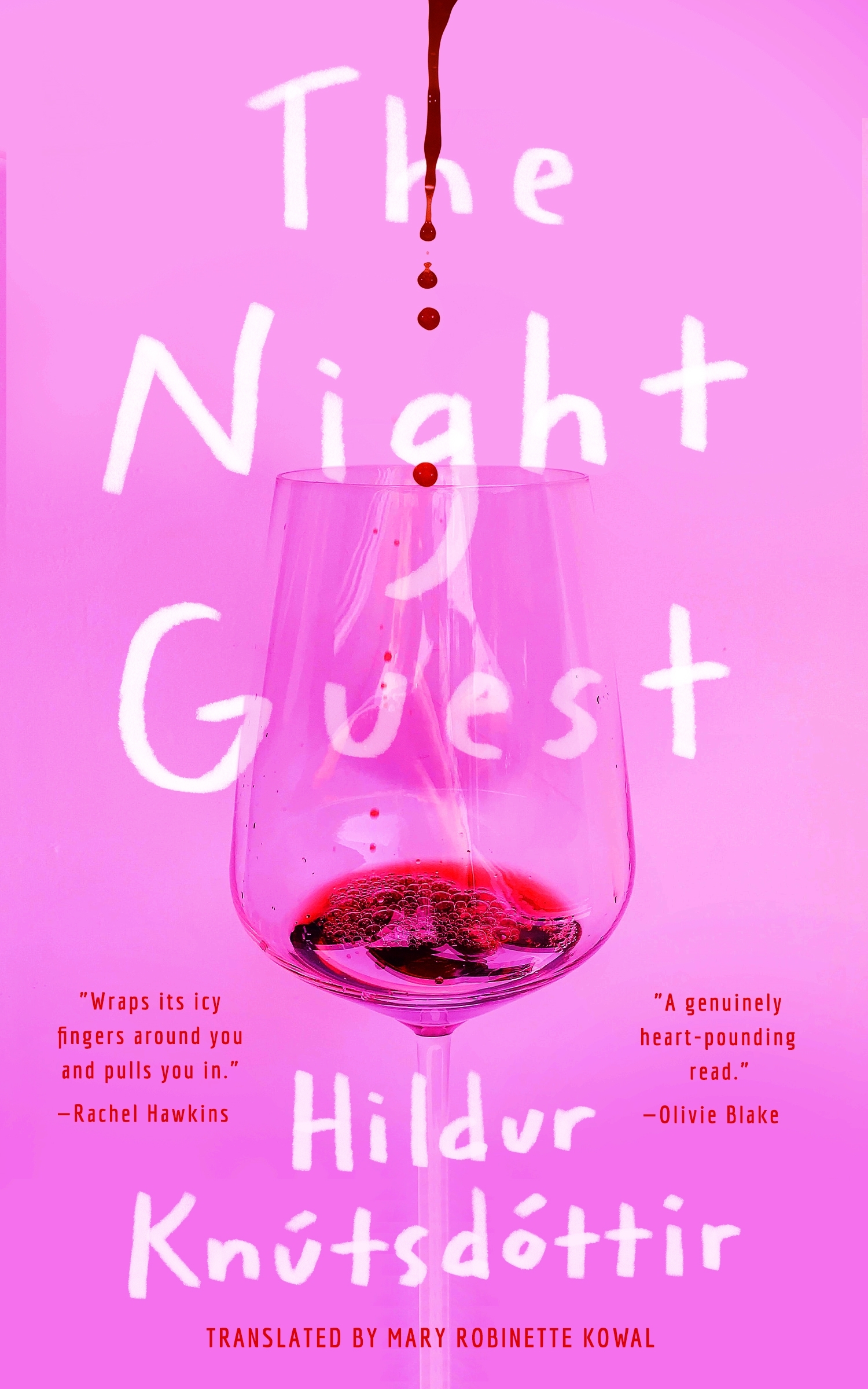
The Night Guest

ABOUT
THE BOOK
Iðunn knows her constant fatigue is a sign that something’s not right, but physicians dismiss her symptoms, and blood tests don’t reveal any cause.
When she talks to friends and family, the refrain is the same — have you tried eating better? Exercising more? Establishing a nighttime routine? She tries to follow their advice, buying everything from vitamins to sleeping pills to a step-counting watch. Nothing helps.
Until one night Iðunn sleeps with the watch on, and wakes up to find she’s walked over 40,000 steps in the night. What is happening when she’s asleep? Why is she waking up with increasingly disturbing injuries? And why won’t anyone believe her?
Original title in Icelandic Myrkrið milli stjarnanna; Published by Forlagið (2021)


ABOUT
THE TRANSLATOR Mary
Robinette Kowal
Mary Robinette Kowal is also the author of The Spare Man, Ghost Talkers, The Glamourist Histories series, and the Lady Astronaut Universe. She is part of the award-winning podcast Writing Excuses and a four-time Hugo Award winner. Her short fiction appears in Uncanny, Tor.com, and Asimov’s. She lived in Iceland while performing for LazyTown (CBS) as a professional puppeteer. The Night Guest was her first work of translation.
Mary Robinette Kowal is also the author of The Spare Man, Ghost Talkers, The Glamourist Histories series, and the Lady Astronaut Universe. She is part of the award-winning podcast Writing Excuses and a four-time Hugo Award winner. Her short fiction appears in Uncanny, Tor.com, and Asimov’s. She lived in Iceland while performing for LazyTown (CBS) as a professional puppeteer. The Night Guest was her first work of translation.
NOMINATING LIBRARY COMMENTS
The Night Guest is a meticulously crafted psychological thriller rooted in contemporary Reykjavik. Its portrayal of Iðunn—who wakes up every morning exhausted and injured, yet finds no medical explanation—creates an atmosphere of creeping dread that swiftly becomes impossible to ignore. The novel is distinguished by its compelling realism and psychological depth. The protagonist is portrayed through a singular, unreliable viewpoint, where subtle gaps in memory and withheld narrative fragments draw readers deeper into the eerie unknown. Dialogues are sharp and occasionally darkly humorous, grounding the strange within the familiar. The structure—comprising short, urgent chapters—builds mounting tension and an immersive sense of disquiet. The story tackles themes of grief, bodily autonomy, and medical gaslighting—especially in the context of systemic dismissal of women’s pain. Iðunn’s interactions with doctors, family, and friends echo broader feminist critiques about disbelief and invisibility in healthcare and society. Simultaneously, the speculation around nighttime behavior—sleepwalking, unexplained violence, loss of control—serves as both literal and metaphorical haunting. Despite being firmly within the psychological horror genre, The Night Guest operates with literary restraint: spare prose, precise imagery, and a calculated withholding of resolution. Its abrupt and ambiguous ending may divide readers, yet it embodies the essence of a modern uncanny tale. For its tightly controlled tone, emotional intensity, and thematic boldness, The Night Guest is a strong candidate for the Dublin Literary Award: -It evokes visceral psychological suspense without relying on sensationalism -It interrogates cultural patterns of disbelief and emotional isolation – It reinvents horror as a lens for contemporary female experience and grief – Its literary elegance and emotional insight position it convincingly among international literary fiction. (Reykjavík City Library)