

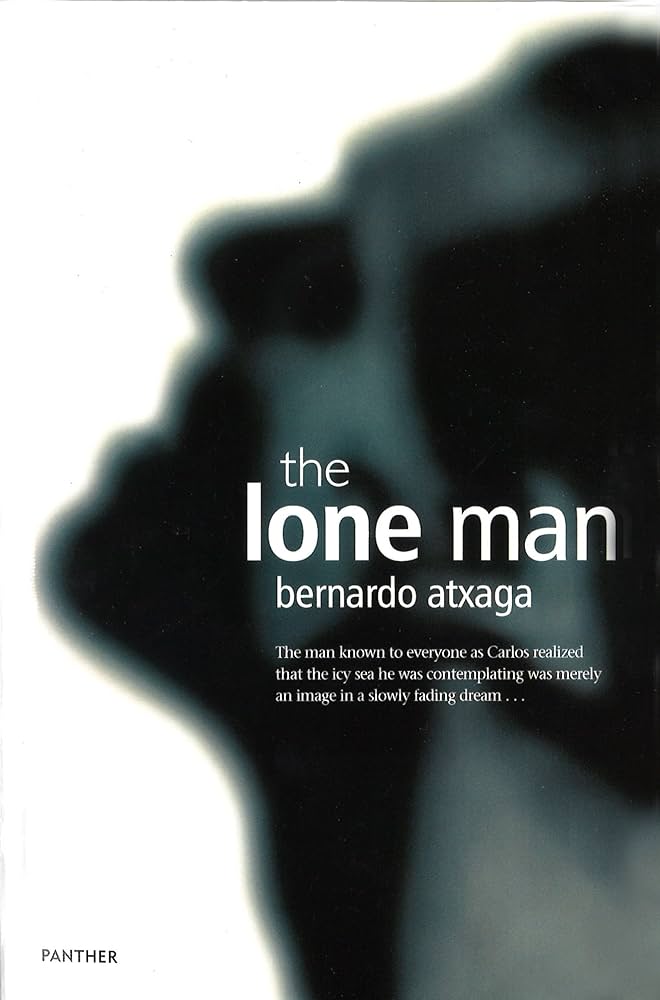
The Lone Man

ABOUT
THE BOOK
Years back, before his spell in prison, before he bought the hotel outside Barcelona, Carlos had been a hunted man, activist in ETA, the Basque Independence Movement, and involved in clandestinity and violence for the good of the Cause. So what is a responsible hotelier doing back once more in the old game? The fact is, after another ETA bomb outrage, the police are out in force hunting for two escaped gunmen, a man and a woman, and Carlos has accepted to hide them in his hotel. This is while the 1982 World Cup is being played in Barcelona and police are swarming all over the hotel to protect the Polish team that is staying there. Little by little it dawns on Carlos that the police are not there to protect the team but are actually closing in on their quarry. He has to get the hunted couple out and away. The Brazil vs Argentina match would be the time to do it … The Lone Man is not, however, a simple crime thriller. It is a narrative set in a lunar landscape of fear. It is a many-layered novel about a frightened man fighting off his past, and the terror that has haunted his past. It is about life on the edge of an abyss.

ABOUT
THE TRANSLATOR Margaret
Jull Costa
Margaret Elisabeth Jull Costa (born 2 May 1949) is a British translator of Portuguese- and Spanish-language fiction and poetry, including the works of Nobel Prize winner José Saramago, Eça de Queiroz, Fernando Pessoa, Paulo Coelho, Bernardo Atxaga, Carmen Martín Gaite, Javier Marías, and José Régio. She has won the Oxford-Weidenfeld Translation Prize more times than any other translator.
Margaret Elisabeth Jull Costa (born 2 May 1949) is a British translator of Portuguese- and Spanish-language fiction and poetry, including the works of Nobel Prize winner José Saramago, Eça de Queiroz, Fernando Pessoa, Paulo Coelho, Bernardo Atxaga, Carmen Martín Gaite, Javier Marías, and José Régio. She has won the Oxford-Weidenfeld Translation Prize more times than any other translator.