
The Eye of Cybelle_Chavarria
2004 Nominated

The Eye of the Cybele

artwork-image

ABOUT
THE BOOK

The central character of The Eye of Cybele is Alcibiades, a stutteringly precocious Athenian general whose physical beauty, unparalleled Olympic achievements, and reckless courage on the battlefield earn the fanatical enthusiasm of the polis; the affection and desire of Lysis, a lusty and seductive temple prostitute; the admiration and patronage of Socrates; and the jealousy and suspicion of Nicias, one of the city’s most powerful generals and a leading competitor for the favour of both Pericles and the masses. At the centre of it all is the Eye of Cybele, a sacred jewel whose mysterious disappearance sets in motion a sequence of deceptions, subterfuges, and failed schemes that ultimately undermine the self-serving ambitions of both Alcibiades and Nicias.
Much of the novel’s real action takes place behind the scenes, however, through the comically megalomaniacal preoccupations of the Keeper of the Sum, a mad but charismatic beggar-priest who founds – and personally administers the sensual sacraments of – a new Cybeline cult. While the core beliefs and aspirations of the Golden Age are beginning to crumble from within, Chavarría depicts – in the phallically obsessed reveries of the Keeper – the birth pangs of a new world religion.
In spite of a complex structure that blends conventional third-person narrative, formal epistles, and deliriously sensual streams-of-consciousness, the novel progresses at a lively pace. Along the way there are savage scenes of torture and war, convoluted tales of political manoeuvring, luridly sensual descriptions of cult sexual activity, and spirited philosophical debates. In a stunning denouement, Chavarría masterly employs the Socratic roots of the suspense genre, with the great sceptical philosopher himself unwittingly assuming the role of a Nick Charles-style detective who logically eliminates one hypothesis and suspect after another to identify the novel’s real culprit for an equally uncomprehending audience.
ABOUT
THE AUTHOR Daniel
Chavarria

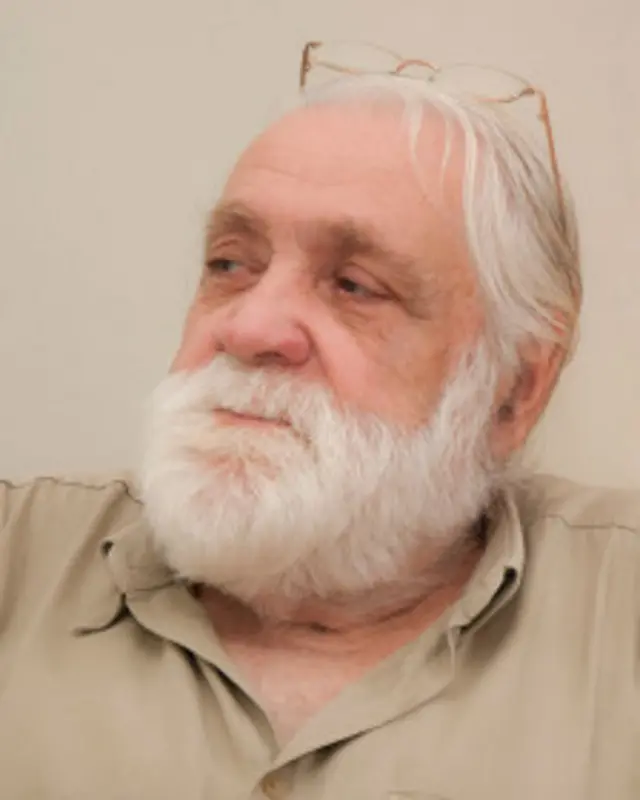
Daniel Chavarria was born in Montevideo, Uruguay, in 1933. He lived in Cuba for over forty years and considered himself a Cuban. Although prolific and diverse in his output, he was perhaps best known for his detective and thriller novels, set against the backdrop of various political events. His novels included: Joy (1978, Cuba); Una Pica en Flandes (2006, Cuba); Viudas de Sangre (2004, Cuba); El Ojo de Cibeles (Letras Cubanas, 2012, Cuba), La Sexta Isla (new edition, Capitan San Luis, 2012, Cuba). His many literary prizes included: the Literature Cuban Nacional Prize and its equivalent in Uruguay, the Bartolomé Hidalgo Prize, in 2010, as well as the Casa de las Américas Prize and the Hammet (United States) for the best detective novel of 2014 – Allá ellos (1991, Cuba). In 2005, he won the Edgar Allan Poe Award (presented by the Mystery Writers of America) for the novel Adiós muchachos (1994, Cuba). He also won the Camilo José Cela (Spain) in 2003, and the Casa de las Américas (2000) and the Alejo Carpentier Prize (2004). On 6 April 2018, just as this book was being sent to print, Chavarria passed away.

Daniel Chavarria was born in Montevideo, Uruguay, in 1933. He lived in Cuba for over forty years and considered himself a Cuban. Although prolific and diverse in his output, he was perhaps best known for his detective and thriller novels, set against the backdrop of various political events. His novels included: Joy (1978, Cuba); Una Pica en Flandes (2006, Cuba); Viudas de Sangre (2004, Cuba); El Ojo de Cibeles (Letras Cubanas, 2012, Cuba), La Sexta Isla (new edition, Capitan San Luis, 2012, Cuba). His many literary prizes included: the Literature Cuban Nacional Prize and its equivalent in Uruguay, the Bartolomé Hidalgo Prize, in 2010, as well as the Casa de las Américas Prize and the Hammet (United States) for the best detective novel of 2014 – Allá ellos (1991, Cuba). In 2005, he won the Edgar Allan Poe Award (presented by the Mystery Writers of America) for the novel Adiós muchachos (1994, Cuba). He also won the Camilo José Cela (Spain) in 2003, and the Casa de las Américas (2000) and the Alejo Carpentier Prize (2004). On 6 April 2018, just as this book was being sent to print, Chavarria passed away.

We're sorry, but we couldn't find any translators matching your search. Please try using different keywords or check back later as we regularly update our collection.

ADDITIONAL INFORMATION

Country
Uruguay
Original Language
Spanish
Publisher
Akashic Books

RELATED FEATURES

News May 21 2026

2026 Dublin Literary Award Winner Revealed

Discover this year's winner!
Video May 16 2026

Brigitte Giraud – Live Fast Q&A

Q&A Session with 2026 Dublin Literary Award shortlisted author Brigitte Giraud, author of Live Fast, exploring the inspirations behind her novel.
Video May 12 2026

Laurent Binet – Perspective(s) Q&A

Check out our Q&A with Laurent Binet, author of shortlisted title Perspective(s), as he discusses the inspirations behind his work and reflects on the role libraries have played in shaping his journey
Video May 8 2026

Ali Smith – Gliff Q&A

Shortlisted author Ali Smith discusses the creative inspirations behind Gliff and reflects on the significance of libraries throughout her reading and writing life in our latest Q&A.

STAY CONNECTED

Stay in touch and sign up to our newsletter to receive all the latest news and updates on the Dublin Literary Award.