The_Book_Club_Maxim_Februari
2012 Nominated

The Book Club

artwork-image

ABOUT
THE BOOK

Thirty-year-old Theresa Pellikaan is typical of the wealthy middle classes – with her respectable background, successful husband and house in an apparently sleepy, yet powerful, rich village. She works in a gallery, also typical of her type. When her former schoolmate Ruth Ackermann, brought up in the same village, makes waves with an international bestseller, but none of the villagers ever mention her achievement, not even the literary circle of Theresa’s father, famous civil rights scholar Randolf Pellikaan, Theresa begins to wonder why. It can’t only be because it’s not ‘literature’. It emerges that there is a dark secret in the village. Every member of the book club has a reason to keep quiet and Ruth Ackerman’s novel threatens to bring the past into the present, with devastating results. Unable to cope with the silence, Theresa investigates, no matter the consequences. (From Publisher)
ABOUT
THE AUTHOR Maxim
Februari

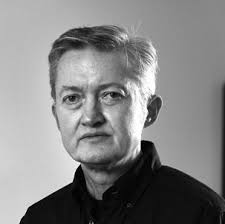
Maxim Februari was born as Marjolijn Drenth. Besides being a writer, he is an ethicist, an art historian, and a lawyer. Februari understands the art of turning moral dilemmas and legal issues into elegant prose. “It’s got to be exciting and entertaining. If you write a pamphlet, no one will read it,” he commented. His novel De literaire kring (The Book Club, 2007), on the morals of the Dutch cultural elite, got a very positive reception. From 2001 to 2010 Februari wrote columns for the Volkskrant newspaper. Some of these columns were published in Park Welgelegen – Notities over Morele Verwarring (Welgelegen Park: Notes on Moral Confusion, 2004). In his PhD thesis Een Pruik van Paardenhaar & Over het Lezen van een Boek (A Wig of Horse’s Hair & On Reading a Book, 2000), nominated for the Golden Owl Award, he examines the relationship between economics and ethics. Currently he writes a weekly column for opinion page of NRC Handelsblad. Some of these, together with some Volkskrant columns, have been anthologised in Ons soort mensen (Our Kind of People, 2011). De maakbare man (The Makeable Man), notes on transsexuality, was published in 2013.

Maxim Februari was born as Marjolijn Drenth. Besides being a writer, he is an ethicist, an art historian, and a lawyer. Februari understands the art of turning moral dilemmas and legal issues into elegant prose. “It’s got to be exciting and entertaining. If you write a pamphlet, no one will read it,” he commented. His novel De literaire kring (The Book Club, 2007), on the morals of the Dutch cultural elite, got a very positive reception. From 2001 to 2010 Februari wrote columns for the Volkskrant newspaper. Some of these columns were published in Park Welgelegen – Notities over Morele Verwarring (Welgelegen Park: Notes on Moral Confusion, 2004). In his PhD thesis Een Pruik van Paardenhaar & Over het Lezen van een Boek (A Wig of Horse’s Hair & On Reading a Book, 2000), nominated for the Golden Owl Award, he examines the relationship between economics and ethics. Currently he writes a weekly column for opinion page of NRC Handelsblad. Some of these, together with some Volkskrant columns, have been anthologised in Ons soort mensen (Our Kind of People, 2011). De maakbare man (The Makeable Man), notes on transsexuality, was published in 2013.

ABOUT
THE TRANSLATOR Paul
Vincent

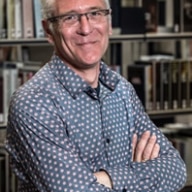
Paul Vincent is a Dutch translator, currently living in London. He studied German, French and Dutch at Cambridge University and taught Dutch for many years at London University before becoming a full- time translator. He has translated over thirty books of fiction and non-fiction, winning the 2011 Vondel Prize for his version of My Little War by Louis Paul Boon. In poetry he has translated among others Achterberg, Reve, Hooft, Elsschot, Bredero, Vondel, Jellema, Claus, Nolens (An English Anthology, Carcanet, 2018), Marsman (Reid Poetry Prize), Gorter, Gezelle, One Hundred Dutch-Language Poems (with John Irons; won Oxford -Weidenfeld Prize, 2016).

Paul Vincent is a Dutch translator, currently living in London. He studied German, French and Dutch at Cambridge University and taught Dutch for many years at London University before becoming a full- time translator. He has translated over thirty books of fiction and non-fiction, winning the 2011 Vondel Prize for his version of My Little War by Louis Paul Boon. In poetry he has translated among others Achterberg, Reve, Hooft, Elsschot, Bredero, Vondel, Jellema, Claus, Nolens (An English Anthology, Carcanet, 2018), Marsman (Reid Poetry Prize), Gorter, Gezelle, One Hundred Dutch-Language Poems (with John Irons; won Oxford -Weidenfeld Prize, 2016).

NOMINATING LIBRARY COMMENTS

Chosen by our readers. With honed wit and masterly dialogue, the author rages against that most endearing of Dutch characteristics – the Protestant work ethic – when it is manipulated and abused by hypocritical wheelers and dealers.

RELATED FEATURES

News May 21 2026

2026 Dublin Literary Award Winner Revealed

Discover this year's winner!
Video May 16 2026

Brigitte Giraud – Live Fast Q&A

Q&A Session with 2026 Dublin Literary Award shortlisted author Brigitte Giraud, author of Live Fast, exploring the inspirations behind her novel.
Video May 12 2026

Laurent Binet – Perspective(s) Q&A

Check out our Q&A with Laurent Binet, author of shortlisted title Perspective(s), as he discusses the inspirations behind his work and reflects on the role libraries have played in shaping his journey
Video May 8 2026

Ali Smith – Gliff Q&A

Shortlisted author Ali Smith discusses the creative inspirations behind Gliff and reflects on the significance of libraries throughout her reading and writing life in our latest Q&A.

STAY CONNECTED

Stay in touch and sign up to our newsletter to receive all the latest news and updates on the Dublin Literary Award.