


Pobeda 1946 A Car Called Victory

ABOUT
THE BOOK
In Tallinn in 1946 a young boy is transfixed by the beauty of a luxurious cream-coloured car gliding down the street. It is a Russian Pobeda, a car called Victory. The sympathetic driver invites the boy for a ride and enquires about his family. Soon the boy’s father disappears. Ilmar Taska’s debut novel captures the distrust and fear among Estonians living under Soviet occupation after World War II. The reader is transported to a world seen through the eyes of a young boy, where it is difficult to know who is right and who is wrong, be they occupiers or occupied. Resistance fighters, exiles, informants and torturers all find themselves living in Stalin’s long shadow.

ABOUT
THE TRANSLATOR Christopher
Moseley
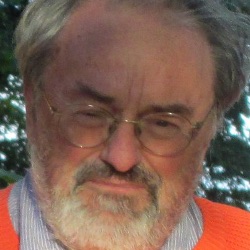
Christopher Moseley was born in Australia in 1950 and is a freelance translator into English from Estonian, Finnish, Latvian, and the Scandinavian languages. He has translated numerous Estonian short stories and three novels, one of which is The Man Who Spoke Snakish. He currently lives in the UK and teaches English and Latvian at the School of Slavonic and East European Studies, University College London.
Christopher Moseley was born in Australia in 1950 and is a freelance translator into English from Estonian, Finnish, Latvian, and the Scandinavian languages. He has translated numerous Estonian short stories and three novels, one of which is The Man Who Spoke Snakish. He currently lives in the UK and teaches English and Latvian at the School of Slavonic and East European Studies, University College London.
NOMINATING LIBRARY COMMENTS
Ilmar Taska’s Pobeda 1946 takes place, as the title suggests, in the year 1946. This is a time of great sorrow for Estonians. World War II has ended and the Estonian Republic, which was thriving before the war, has been occupied by the Soviet Union. Estonians have lost their freedom once again. This is the kind of hopeless environment where our protagonist, a six year old boy is growing up. His parents, an opera singer Johanna and a BBC radio announcer Alan, have been separated by the iron curtain. As children often do, the boy has managed to maintain his childhood innocence, despite recent events. However, over time, the secretive, manipulative and cruel reality of the Soviet occupation falls heavily on the boy’s young shoulders. His childhood is scarred forever by the symbolic blows of the sickle and the hammer.
Tallinn Central Library, Estonia
A masterfully composed and exciting debut presenting a multilayered story of a little boy and of how the load of secrets on his shoulders takes him from an innocent childhood into a dangerous post-war reality. His growing friendship with the driver of the brand new Pobeda will influence the live of all family members. The author’s precise sentence and good rhythm make the text easy to follow.
Tartu Public Library, Estonia