one_man's_bible_xingjian
2004 Nominated

One Man’s Bible
artwork-image

ABOUT
THE BOOK

One Man’s Bible is a fictionalised account of Gao Xingjian’s life under the Communist regime. Whether in “beehive” offices in Beijing or in isolated rural towns, daily life is riddled with paranoia and fear, as revolutionaries, counterrevolutionaries, reactionaries, counter reactionaries and government propaganda turn citizens against one another. It is a place where a single sentence spoken ten years earlier can make one an enemy of the state. Gao evokes the spiritual torture of political and intellectual repression in graphic detail, including the heartbreaking betrayals he suffers in his relationships with women and men alike.
ABOUT
THE AUTHOR Gao
Xingjian

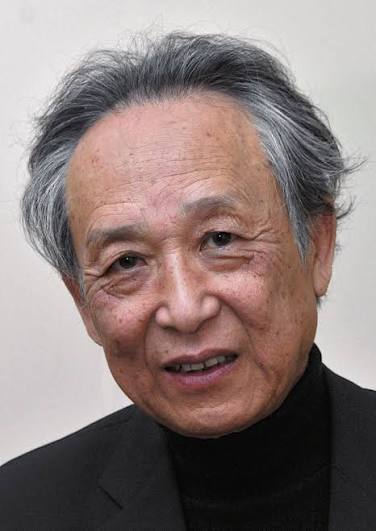
Gao Xingjian (born January 4, 1940, Ganzhou, Jiangxi province, China) is a Chinese émigré novelist, playwright, and critic who in 2000 was awarded the Nobel Prize for Literature “for an oeuvre of universal validity, bitter insights and linguistic ingenuity.” He is also renowned as a stage director and as an artist.

Gao was educated in state schools and from 1957 to 1962 attended the Beijing Foreign Languages Institute, where he earned a degree in French. Persecuted as an intellectual during the Cultural Revolution, Gao was forced to destroy his early writings and was later sent to a re-education camp, where he endured nearly six years of hard labour. Afterward he was assigned by the government to work at the Foreign Languages Press. He became a translator but was unable to publish his work or travel abroad until 1979.

Gao first gained critical recognition with the publication of the novella Hanye zhong de xingchen (1980; “Stars on a Cold Night”). In 1981 he became a resident playwright with the Beijing People’s Art Theatre, and in 1982 his first play, Juedui xinhao (Alarm Signal), written in collaboration with Liu Huiyuan, was performed.

We're sorry, but we couldn't find any translators matching your search. Please try using different keywords or check back later as we regularly update our collection.

ADDITIONAL INFORMATION

Country
China, France
Original Language
Chinese
Author
Publisher
HarperCollins

RELATED FEATURES

News November 18 2026

71 Novels Nominated for the 2027 Dublin Literary Award

71 titles have been nominated by 90 libraries from 41 countries for the 2027 Award
News November 11 2026

2027 Dublin Literary Award Judges Announced

Meet our judging panel for 2027 Dublin Literary Award
Video August 27 2026

2026 Dublin Literary Award Winner in Conversation

Ali Smith in conversation with Belinda McKeon at International Literature Festival Dublin.
Video August 27 2026

2026 Dublin Literary Award Ceremony

Watch back the 2026 Dublin Literary Award Ceremony which took place on 21st May 2026

STAY CONNECTED

Stay in touch and sign up to our newsletter to receive all the latest news and updates on the Dublin Literary Award.