

Memories of My Melancholy Whores

ABOUT
THE BOOK
This enticingly sensual yet at the same time innocent adventure tells of an unnamed second-rate reporter who on the eve of his ninetieth birthday decides to give himself ‘a night of mad love with a virgin adolescent’. In a little more than 100 pages, Garcia Marquez proceeds to describe a series of encounters that is hypnotising and disturbing. When he first sees the chosen girl – a shy fourteen-year-old, whom he calls Delgadina – asleep, entirely naked, in the brothel room, his life begins to change completely. He never speaks to her nor does he learn anything about her, nor she of him. But her presence spurs the aged pensioner to recall his experiences with the other women in his life, all whores by profession, all paid to perform for him the acts of love. But now he realizes that ‘sex is the consolation one has for not finding enough love’. Smitten, he screams of his love from the rooftops, which for him means writing about it in his weekly newspaper columns, and in return, he becomes the most famous man in his town.
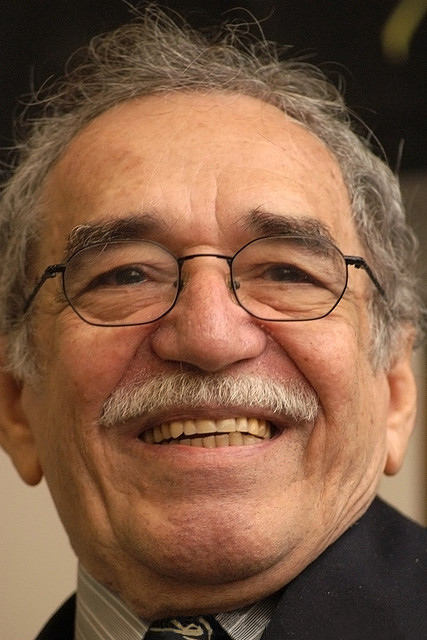
Love has always been a major theme in Garcia Marquez’s writing. It is often visualized in his fiction as a source of endurance, a bulwark against the rush of time’s passage. In Love in the Time of Cholera, he celebrated a love that was almost fifty years in forming, modelling it on the courtship of his own grandparents. This last novel, written at the peak of the author’s fame, is another illustration of its tranformative power. Memories of My Melancholy Whores, written in Garcia Marquez’s incomparable style, movingly contemplates the misfortunes of old age and celebrates the joys of being in love.
ABOUT
THE TRANSLATOR Edith
Grossman
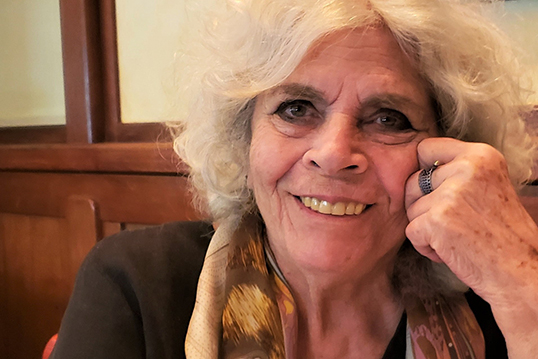
Edith Grossman is an American Spanish-to-English literary translator. One of the most important contemporary translators of Latin American and Spanish literature, she has translated the works of Nobel laureate Mario Vargas Llosa, Nobel laureate Gabriel García Márquez, Mayra Montero, Augusto Monterroso, Jaime Manrique, Julián Ríos, Álvaro Mutis, and Miguel de Cervantes. She is a recipient of the PEN/Ralph Manheim Medal for Translation and the 2022 Thornton Wilder Prize for Translation.
Edith Grossman is an American Spanish-to-English literary translator. One of the most important contemporary translators of Latin American and Spanish literature, she has translated the works of Nobel laureate Mario Vargas Llosa, Nobel laureate Gabriel García Márquez, Mayra Montero, Augusto Monterroso, Jaime Manrique, Julián Ríos, Álvaro Mutis, and Miguel de Cervantes. She is a recipient of the PEN/Ralph Manheim Medal for Translation and the 2022 Thornton Wilder Prize for Translation.