

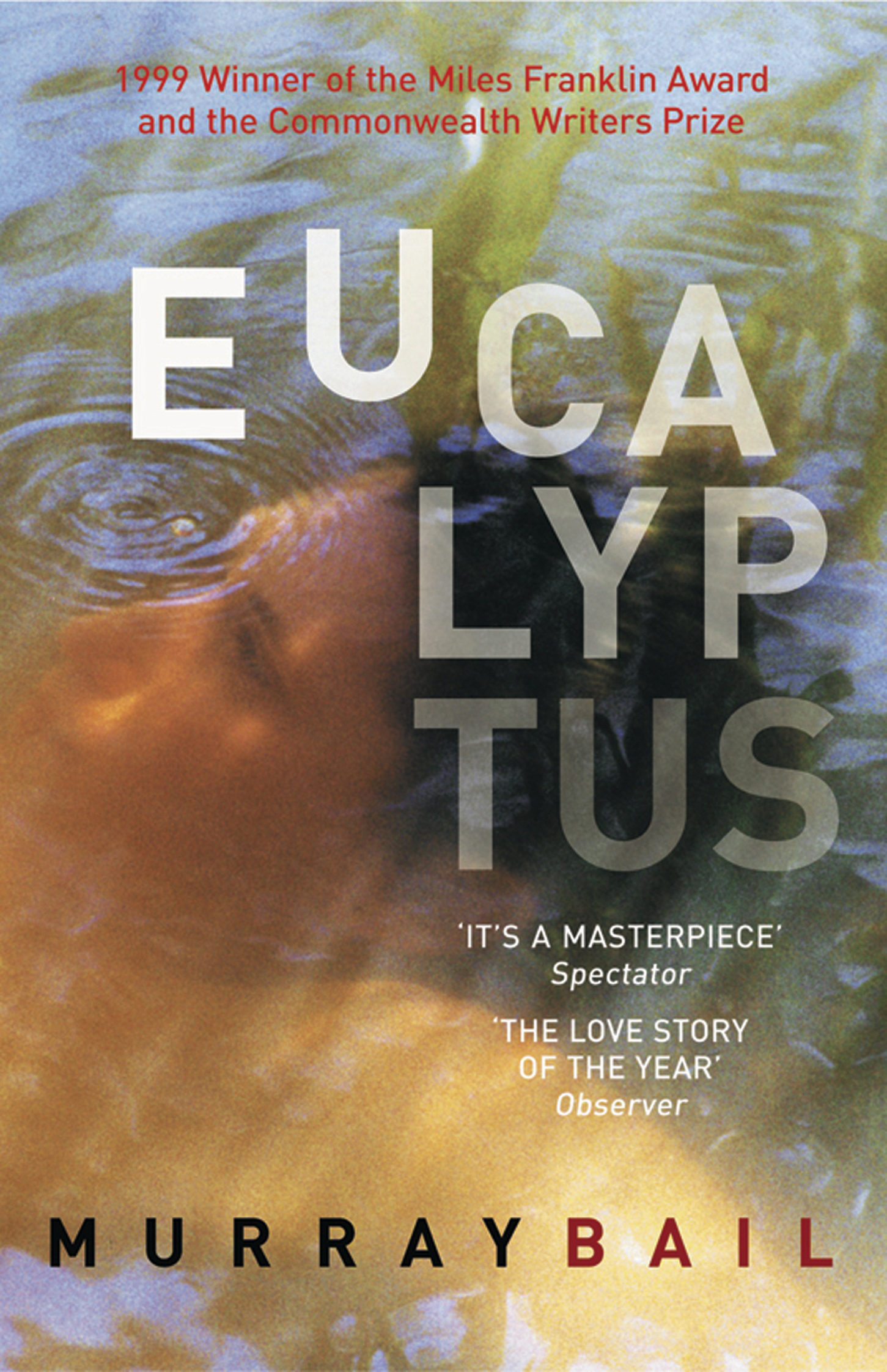
Eucalyptus

ABOUT
THE BOOK
‘A masterpiece. A novel of high seriousness and higher playfulness’ Michael Hulse, Spectator
On a property in New South Wales, a man named Holland lives with his daughter, Ellen. As years pass and Ellen grows into a beautiful young woman, her father announces his decision: she will marry the first man who can name all the eucalypts, down to the last tree.
As suitors clamber to meet Holland’s challenge, Ellen encounters a strange young man among her father’s trees – a storyteller, with enchanting tales of faraway lands.
‘Murray Bail is the warmest and quick-witted of storytellers. You will never forget what is at the heart of this book: one of the great and most surprising courtships in literature’ Michael Ondaatje

NOMINATING LIBRARY COMMENTS
Eucalyptus reads like an arborist’s notebook. The title of each chapter is the Latin name of a Eucalyptus tree. The shape, character and habits of the trees are explained in detail and linked to people, places and incidents throughout the book. The story is set on a property in New South Wales. Holland met his wife through a newspaper advertisement. When she became pregnant he took out insurance against her having twins. Twins eventually arrive, but the mother and one twin dies. Holland collects a large cheque with which he buys the property. More by chance than design he starts planting Eucalyptus trees. He sets out to learn all he can about them. His daughter grows into a very beautiful girl. She has many admirers. The father decides that the man who can name his by now five hundred Eucalyptus trees would win the hand of his daughter. Many contenders arrive and fail. A Mr. Cave, who appeals to the father but not the daughter, seems like the winner. While he is still naming the trees a young man appears. At times it’s hard to tell if he is real or a figment of Ellen’s imagination. He knows the names of the trees; each one suggests a story. He tells Ellen the stories but irritatingly does not tell the ending of most. Eventually, Mr. Cave names all the trees and wins Ellen’s hand. Ellen goes into decline. Her illness puzzles the doctor. It is decided that perhaps story telling would help, but to no avail. Eventually, the young man returns and explains how he came to be on the property. They probably lived happily ever after but the reader is not told. It was an interesting read, sometimes seemed repetitive for somebody who was not familiar with the Eucalyptus and could not really appreciate the different types. I think I would need to read it a second time to really understand it.
(Member of Raheny Library Reading Group)
This is a strange book, more about landscape, the landscape of Australia, than a narrative in the usual sense. Holland owns a large property in New South Wales – he is obsessed by the eucalyptus tree and has every known variety planted on his land. He has a beautiful daughter Ellen and will give her in marriage to any man who can identify all the eucalyptus trees on the property. Since we are in post-war Australia the story seems to be some kind of allegory, but allegory of what? Ellen appears as some kind of medieval lady fair, watching from her tower for her knight in shining armour. In the end there are two serious contenders, one who comes openly, the other covertly. It is something of a paradox that the more likely successful suitor employs story telling to woo his beloved, given the novel’s overall thin narrative. This is a beautifully written book and readers who love language will love it, but if you also like a good story it will disappoint.
(Member of Raheny Library Reading Group)
Eucalyptus reads like a fairy story. A beautiful young girl Ellen Holland lives happily with her adoring father in rural Australia. The father has over the years become obsessed with the study and planting of eucalyptus trees. As Ellen reaches marriageable age Holland decides that the suitor who can name every specimen of eucalyptus will be the one to win his daughters hand. Men come and go, all failing the test until the arrival of Mr Cave. Ellen neither agrees nor disagrees with her father’s plans but when a stranger appears among the trees and regales her with stories of love and marriage her sensuality is aroused and the prospect of Cave passing the eucalyptus test sends her into a state of melancholy. Bail has taken a simple plot, added some wonderful descriptive accounts of the Australian countryside and come up with a fascinating work. One couldn’t read this book without wishing to know more on the subject of eucalyptus. (Member of Raheny Library Reading Group)