

News Past Winner Spotlight: Michael Crummey
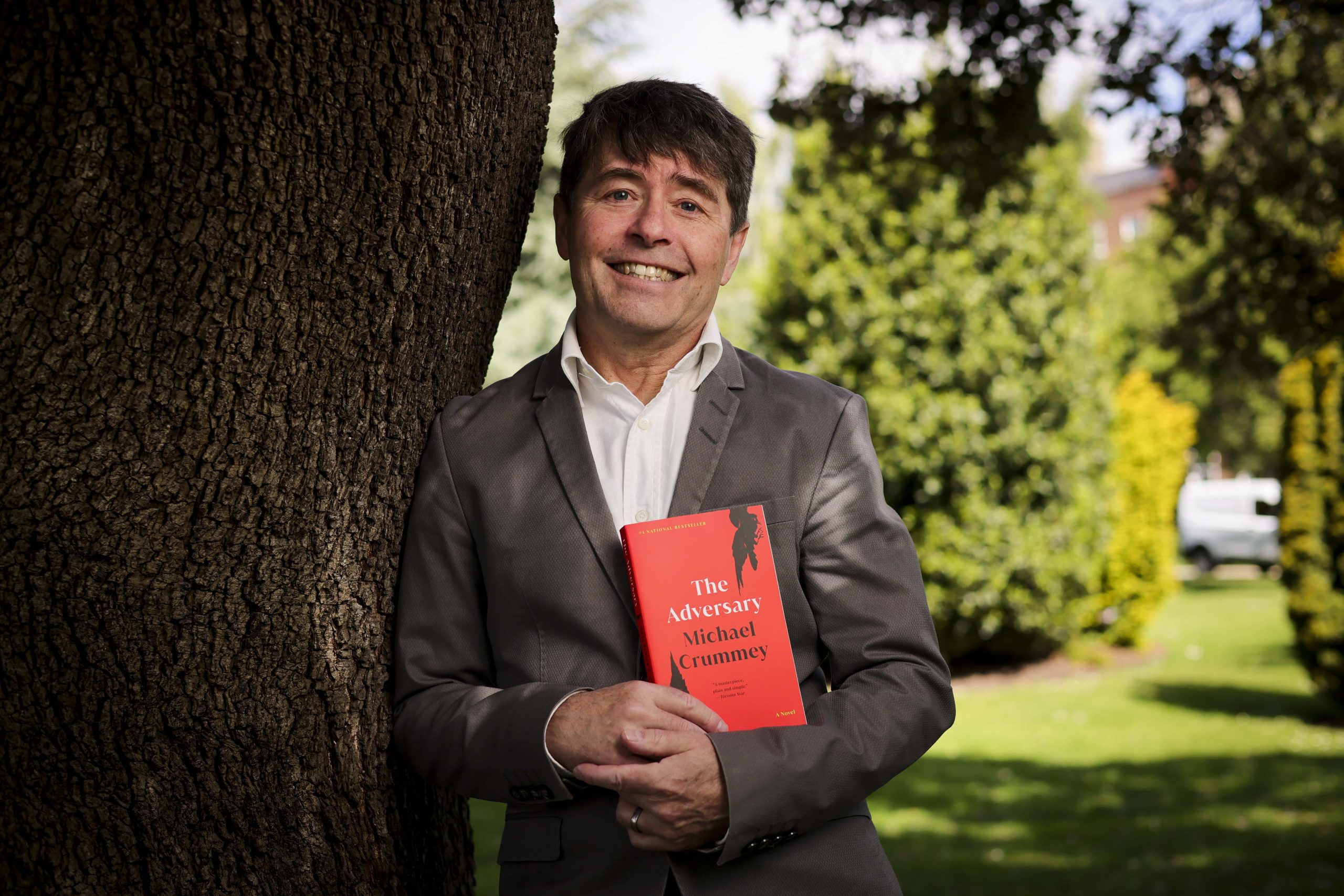
2026 Dublin Literary Award winner Michael Crummey reflects on the surreal impact of the prize and its connection to public libraries. He also notes how it has expanded his readership and given him greater freedom to continue writing.
Nine months on from winning the Dublin Literary Award, has the moment settled for you — or does it still feel unreal?
The fact is, both of those things are true. In most ways my life has settled back into its old routines and the Dublin Award has become “something that happened” last year. But there are moments when the sheer unreality of it strikes me fresh. And I can still access the surreal, slightly drunken feeling of those days I spent in Dublin with my longtime editor and my agent. It was unlike anything that’s happened to me as a writer. I doubt I’ll experience anything close to it again.
What did winning an award nominated by public libraries around the world mean to you personally? Did that aspect of the award feel different from other prizes you’ve received?
For me, the central role of public libraries in the administration of the prize is probably the most unique element of the Dublin Literary Award, followed closely by the sponsorship undertaken by Dublin city council. Both of those things make me feel incredibly proud to be associated with the award. My own local libraries played an indelible role in my development as a reader and a writer. Libraries continue to be a central public institution in communities large and small the world over. Now more than ever, I think, its essential to support and applaud the role of public institutions in the creation and maintenance of community, of human relations. And as generous as banks and oil companies may be in funding arts and awards, the notion of an international prize sponsored by a city council, by the citizens of a major cultural hub like Dublin, gives me hope for the future.
In an era of algorithms, what role do you think librarians play as cultural editors?
It’s interesting, I’ve been hearing for a while now the unexpected revival in Canada of the small community bookstore. The largest publisher in the country opened 67 new independent bookstore accounts last year, which no one would have predicted a decade ago when it looked like the independents might be driven to extinction by huge box stores and online sellers.
As one independent bookseller said to me recently, no one is getting rich selling books as an independent in Canada. But it’s important work. And it’s viable again. I think that development speaks to the appetite people have for real human contact, for human interaction, for community. And of how important it is to us to feel our lives being “curated” and nurtured by the experiences and opinions of other humans. Which is also, come to think of it, part of what books are for.
I think libraries occupy a similar niche as independent bookstores, on a larger scale. They offer a space that thrives on human interaction, that fosters a sense of community. The algorithm and the online sellers and the box stores aren’t going anywhere, but I think it’s becoming obvious to many of us how limited they are. Libraries have been holding down the fort for years now, providing an alternative for people who want a human experience of the world. Please God, they will always be with us.
Was there a particular message, encounter, or response since winning that stayed with you?
There have been so many. Seamus Heaney’s widow was at the award ceremony in Dublin and I got to tell her how much her husband’s writing has meant to me. The Newfoundland and Labrador Public Libraries (who nominated my novel) held a public event in St John’s shortly after I got home and I had the chance to return some of the love that local libraries have been offering my writing for decades now. And I was struck by how much the award seems to have meant to Newfoundland as a whole. I’ve heard from countless people who watched the award ceremony online with their fingers crossed. The stories of the impromptu celebrations that took place when I was announced as the winner have really touched me. Newfoundlanders have a relationship to their storytellers that reminds me of Ireland’s relationship to theirs—a sense of ownership and pride, of recognizing themselves in the work of their writers. The response to the award at home has made me realize that these crazy stories I write, alone in a room in my pajamas, are deeply intertwined in the lives of the people who read them here.
Has the Award altered your writing life in any practical or unexpected ways?
I don’t know if I can point to anything specific in this respect. Other than the very practical issue of money. I was able to pay off our home in St. John’s with some of the prize money, and the absence of that looming expense each month offers a sort of freedom I never expected. I’ve been a full-time writer for twenty five years now, which is a privilege I have never taken for granted. But it hasn’t always been easy financially. The change in our circumstances facilitated by the prize money means that writing full-time for the foreseeable future is a much more likely possibility.
Has the win changed how you think about the readership of the book, or how the book now sits in your wider body of work? Did it change your relationship to The Adversary itself?
Well it changed how I think about the book’s readership in this one essential way: there are more of them. And there are readers in more countries. The book has had a second life in Canada due to the win. The rights have sold into a number of new territories as a direct result as well. And some of my earlier novels have started finding international homes on the heels of The Adversary. So that novel seems to be acting as a kind of gateway drug for all of my writing.
Are you working on something new — and does it feel like a continuation or a departure?
Now that I have some laurels, I am resting on them! I do generally take a number of years between novels, waiting for the well to fill up again. I am picking away at a collection of poetry that’s been unfolding in the background since the pandemic, and have also played around with some screenplay ideas, so It’s not that I’m doing nothing. But the notion of “work” for me usually means a novel. It feels like a job and I treat it like one, sitting at the desk for a certain number of hours a day, setting myself deadlines. I have no idea what the next one might look like, but I do seem to be pretty committed to tending the garden I’ve planted for myself, as opposed to striking off in wild new directions each time. So we will see.
Are there particular themes or questions that continue to draw you back to writing?
Everything I’ve ever written has been centered pretty closely on the place and culture I come from. In some ways, I think I’ve been trying to understand myself by getting the place that made me down on paper. Because Newfoundland is an island off on its own in the north Atlantic, it’s been a kind of genetic, cultural and historical isolate for most of it’s settler history. That isolation has made it a strange little world unto itself. I find the place and its people endlessly fascinating. Having said that, I have noticed that the last couple of novels, including The Adversary, use historical Newfoundland as a stage to play out more contemporary or obviously “universal” concerns. So I’m interested to see if that’s something I carry on with.
Has winning the Award changed how you approach the blank page — or not at all?
I have always insisted on not allowing anything outside the blank page to influence what I end up writing. I don’t think about who might read what I’m writing, or whether a publisher will like it, or how it will be received in Toronto or Dublin or Warsaw or the house across the street. I’m writing for myself first and foremost. I’m hoping that holds true in this instance as well.
Has the experience of the prize opened up new possibilities or directions you’re excited to explore?
Well. I’m starting to be an old man and I have been at this racket a long time. So I feel like my trajectory isn’t easily altered at this point. Which may be a good thing or a bad thing. But I have made my peace with that fact, for the most part.
Is there a book you’ve read recently that you’d recommend to readers of the newsletter?
This one may be a little harder to find, but it is well worth the effort of tracking it down: All Saints, by a Canadian writer named K D Miller. It’s a collection of loosely linked short stories, published in 2014 by the mighty independent house, Biblioasis. Miller is a master of the story form. She’s working on the same level as Alice Munro and Mavis Gallant, completely assured, surprising, moving. Love her work. Highly recommended.