
Haram
ABOUT
THE BOOK
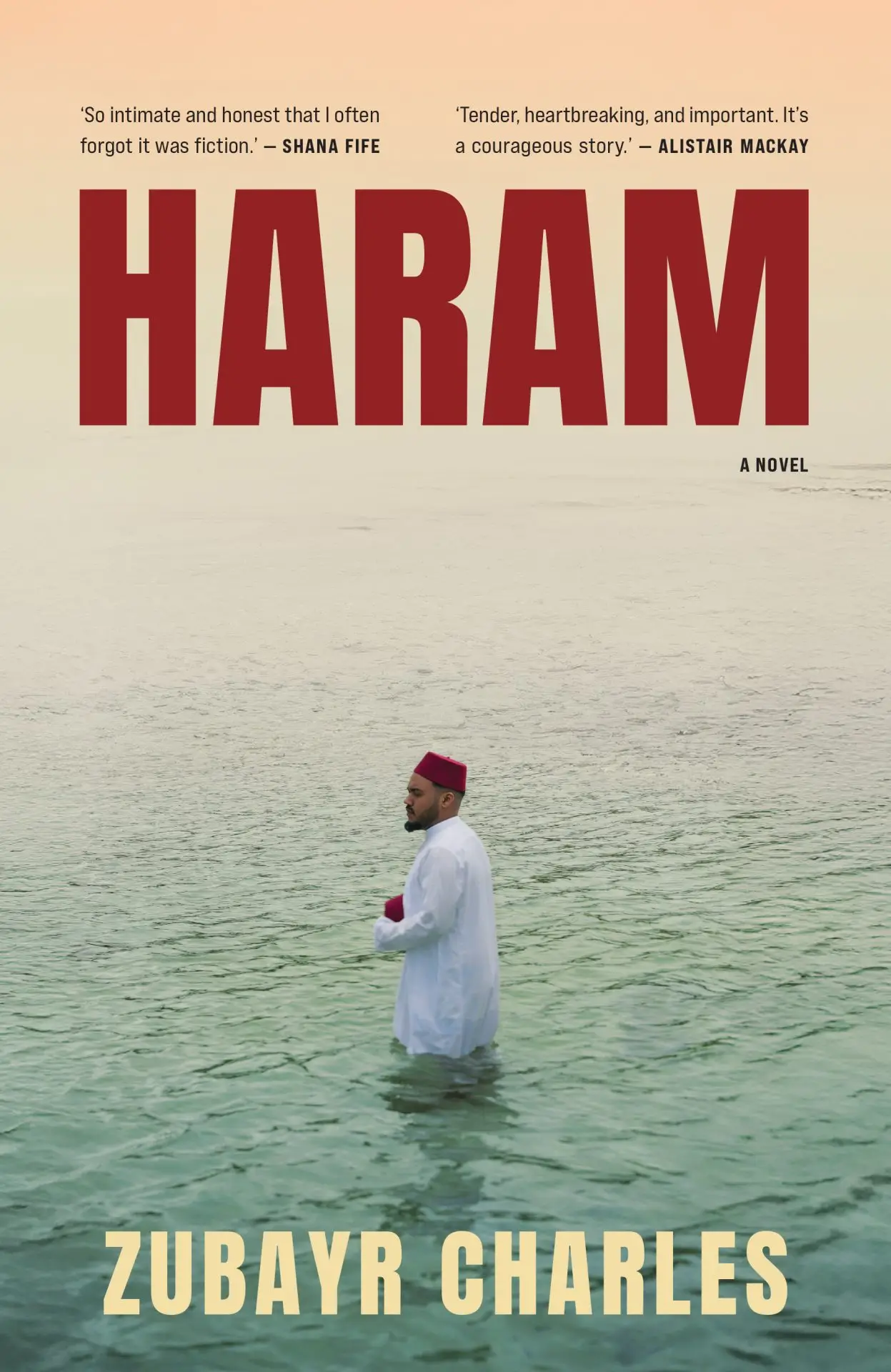
In the close-knit Muslim community in Cape Town where he was was raised, Muhammad has always tried to be the praise-worthy son of his fiercely protective mother, Zaynab. He lives by the rules of his faith daily, but beneath the surface, he feels trapped between who he is expected to be and who he truly is.
When Muhammad meets Riyaaz one Friday evening, his world suddenly shifts in drastic and unexpected ways.
Haram captures the rhythms of prayer alongside the secrets that families hide – in a bustling city alive with unspoken desires. A tender and unflinching debut novel.
NOMINATING LIBRARY COMMENTS
Set in 2011 against the rich tapestry of Cape Malay culture in Cape Town, the narrative is an intimate chronicle of firsts. It follows seventeen-year-old Muhammad, a deeply observant youth who prays five times a day and strives to live up to the stringent expectations of his devout mother, Zaynab. However, beneath this carefully constructed façade, Muhammad is suffocating. Charles masterfully captures the intense internal conflict experienced by a young man torn between the collective identity of a close-knit Muslim community and the urgent, often terrifying discovery of his individuality. The literary merit of Haram is evident in its highly textured world-building and linguistic authenticity. Originally conceived during the author’s Master’s programme in Creative Writing at the University of Cape Town, the novel evolved into a meticulously crafted narrative. Charles, who is also a recognised poet and playwright, brings a lyrical precision to his prose. He brilliantly foregrounds the Cape Malay vernacular by weaving English, Kaaps, and Arabic into the fabric of the story. This linguistic blend does more than set a scene; it immerses the reader completely in Muhammad’s highly detailed, anxiety-driven reality.
Furthermore, Charles actively resists the trope of a static, faultless protagonist. Muhammad is an introvert grappling with profound social isolation, hidden sexuality, and a spiralling reliance on alcohol. By exploring these topics, which are strictly forbidden or ‘haram’ within his community, the author engages in rigorous self-scrutiny and offers a brave social commentary on youth mental health. The novel sheds a crucial light on the silent suffering of teenagers who feel they cannot confide in those around them. Despite its exploration of taboo subjects and the intense Cape Town nightlife, the novel never relies on sensationalism. Instead, it remains a tender, deeply empathetic tale that asks universal questions about how much our faith shapes our worldview and what happens when we must hide core parts of ourselves to belong. (City of Cape Town Library and Information Services)