News Translator Spotlight: Jo Heinrich
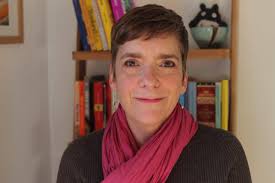
When Marzahn, Mon Amour by Katja Oskamp won the Dublin Literary Award in 2023, it marked a remarkable debut in literary translation for Jo Heinrich. In this Q&A, Heinrich reflects on the award experience, the art of translating German literature into English, and the evolving role of translators in today’s publishing landscape.
How did it feel to have Marzahn, Mon Amour by Katja Oskamp recognised with the 2023 Dublin Literary Award?
It was an absolute rollercoaster, both for Katja and for me! We were both utterly wired in the run-up to our trip to Dublin; neither of us could believe that this unassuming little book had beaten all the great titles nominated. But looking back now, I absolutely adored working on every chapter and getting such a warm feeling from it, and Katja’s writing is so well crafted that every character feels like a friend; each of their stories is just beautiful. So it was really wonderful to know that the jury saw that too.
How has winning the Dublin Literary Award impacted your life and career?
It gave me so much more visibility and credibility in the publishing world at such an early stage in my career (Marzahn was my first literary translation). I can’t quantify its effect precisely but there are certainly jobs I’ve been offered that might never have happened were it not for that badge of honour. And suddenly other translators recognised me without me having to introduce myself. The prize money was obviously an amazing bonus too – the sheer amount of it led to quite some imposter syndrome at first! – and so I resolved to ensure some went to good causes. When I found out that Daniel Hahn had used his Dublin Literary Award winnings to set up the TA First Translation Prize to recognise new talent, I immediately pledged some of mine to it too; it was already dear to my heart as Marzahn, Mon Amour had been a runner-up for this prize.
Can you share a memorable moment from the award ceremony or your visit to Ireland?
There are just so many! Katja and I had an amazing few days in Dublin and we felt like royalty. So many people wanted selfies with us as soon as the ceremony was over, and it was remarkable to see our book emblazoned on the city centre’s bus shelters as the winner, but probably the craziest moment was when we were out together the next day and a little old lady looked up from her Zimmer frame and stopped us in the street to congratulate us – our fifteen minutes of fame!
Since 2023, have you noticed any shifts in how translators are perceived or the kinds of opportunities available to them?
I think translators are generally well respected, but from what I can see, publishers (or at least the ones I have access to – the independents) are being squeezed more than they were. Manufacturing costs have risen but the big retailers make sure the price of books doesn’t, and the cost of living doesn’t help. It’s a labour of love, and as a result, there are fewer opportunities for translators to get a foot in the door. Would you want to pay an author, a translator and a foreign publisher for the rights to a book, when you could just pay an author writing in English? It’s tough out there: thank goodness for prizes such as the International Booker and the Dublin Literary Award shining a light on translated fiction.
How do you approach translating cultural nuances, humour, or idiomatic expressions from German into English without losing the author’s voice?
Wow, where to start?! Some of the nuances might need to be explained in a few words, albeit very gently and quietly so it feels like a natural part of the text, rather than a footnote distracting the reader from the plot. With an idiom or a double meaning, I sit with it for a few days, and sometimes inspiration strikes in the night or, more often, in the shower… or it might be a matter of sitting down for a few hours with a thesaurus and thrashing out a list of possibilities until the best (or least awful) solution floats to the top. I love this process – it’s like a jigsaw piece slotting into place. After I’ve become immersed in a text for a few weeks, its voice in English starts to grow naturally, almost instinctively, and I can tell straight away if something would or wouldn’t come out of the narrator’s mouth – don’t ask me how though!
In your view, what is the role of translators today in shaping how literature crosses borders, and how do you see that role evolving?
In the current political climate, it feels more crucial than ever to break down barriers and bring voices across from other parts of the world, to prove we’re all human. When I first became interested in literary translation, I was just looking for a good story, but now I can see that there is a definite political element to translation: we’re here to bring people together.
AI tools are increasingly being used in translation. Have you had any experience with them, and do you see this trend as a threat to the craft and integrity of human translation?
I do some commercial translation too, and the industry is full of it, unfortunately. The working environment has completely changed: highly trained translators are being paid a lot less just to review and correct AI output. The quality’s often poor and a great deal of the joy has gone from translation work. Many of my colleagues have left, or are leaving, the profession. Yes, it’s quicker and cheaper but I’ve heard terrible stories about mistranslations and their dangerous consequences.
As for literary translation, we occasionally hear of publishing companies intending to launch ranges of AI-translated titles, but I live in hope that if these books see the light of day, the public will vote with their feet: there is a soullessness to an AI-translated text and SO much is lost. To me it feels like an ‘Emperor’s New Clothes’ scenario with no chance of the obvious being addressed any time soon.
Looking back on Marzahn, Mon Amour, is there anything you would do differently in the translation now, with the experience and recognition you’ve gained?
There are a few words I’d love to change; I’ve had a lot more experience since those days and I now have plenty of better ways in my toolbox to translate certain phrases that often crop up. Also having done a few readings from the book, there were one or two sentences where the word order slipped me up and I ended up saying something slightly different from what’s on the page. One of my translation steps is to read it aloud to check it flows, but somehow reading it to an audience jumbles it so much more. Or maybe it’s just the nerves!
Thanks to Jo Heinrich for taking part in this interview, you can find out more about Jo Heinrich on her website and discover more about Marzahn, Mon Amour here.