Constantine's_Crossing_Dejan_Stojiljkovic
2012 Nominated

Constantine’s Crossing

artwork-image

ABOUT
THE BOOK

World War II, the sleepy little town of Niš in southern Serbia, occupied by the Nazis. Field Commander Otto von Fehn has to cope with one headache after another: too many troops and not enough support or supplies, the backward locals who are ignoring their German occupiers and killing each other in a brutal civil war involving at least three different factions, and now the Ahnenerbe has sent one of its experts to meddle in the excavations of a nearby ancient Roman settlement. Von Fehn does his job with stereotypical German efficiency. Few people know that Naissus (modern day Niš) is the birthplace of Constantine the Great, or that he constructed a mighty armory there. Major Heinrich Kahn of the SS certainly did not. He is sent to the backwaters of the Balkan’s on a mission by the Fuehrer himself. He must find Constantine’s Crossing beneath the town and capture the final relic — the battle sword of Constantine — that will give Hitler the ultimate power he needs to complete his plan to master the world.
ABOUT
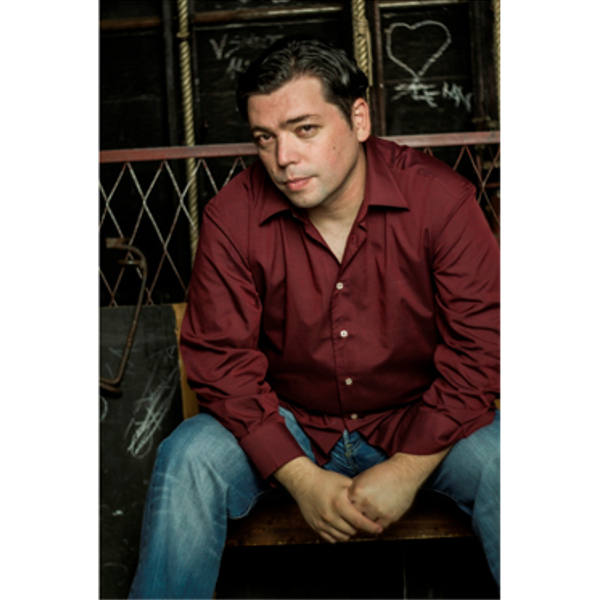
THE AUTHOR Dejan
Stojilokovic

Dejan Stojiljković was born and raised in Nis, Serbia, a small town that is best known as the birthplace of the Roman emperor Constantine the Great.

Perhaps using that historical backdrop as an inspiration in his own works, Stojiljković is one of the most popular and widely-read authors in Serbia. His The Omen of Angels was hugely successful in 2013, a riveting biographical novel about Constantine. That was just the latest in a long line of releases which won prestigious literary awards and critical accolades all over Europe.

One of those earlier novels, Constantine’s Crossing, was originally released in Serbia in 2009, and has now been translated to English for the first time. Published by Blooming Twig Books, it was nominated for two international book awards: Balkania and IMPAK Dublin. Again using his hometown as the setting, this time at the height of World War II, Constantine’s Crossing focuses less on blood and death, and more on individual responsibility during war and what causes evil in man. The words flow easily and somehow takes the reader to a dark, dreary, war-torn town, yet makes the reader want to stay.

In addition to his traditional novels, Stojiljković has also written several comic scripts and a collection of essays on comics. His writing style spills from fantasy to horror and everywhere in between, delighting readers in English, Russian, Macedonian, Greek, and his native Serbian.

Dejan Stojiljković was born and raised in Nis, Serbia, a small town that is best known as the birthplace of the Roman emperor Constantine the Great.

Perhaps using that historical backdrop as an inspiration in his own works, Stojiljković is one of the most popular and widely-read authors in Serbia. His The Omen of Angels was hugely successful in 2013, a riveting biographical novel about Constantine. That was just the latest in a long line of releases which won prestigious literary awards and critical accolades all over Europe.

One of those earlier novels, Constantine’s Crossing, was originally released in Serbia in 2009, and has now been translated to English for the first time. Published by Blooming Twig Books, it was nominated for two international book awards: Balkania and IMPAK Dublin. Again using his hometown as the setting, this time at the height of World War II, Constantine’s Crossing focuses less on blood and death, and more on individual responsibility during war and what causes evil in man. The words flow easily and somehow takes the reader to a dark, dreary, war-torn town, yet makes the reader want to stay.

In addition to his traditional novels, Stojiljković has also written several comic scripts and a collection of essays on comics. His writing style spills from fantasy to horror and everywhere in between, delighting readers in English, Russian, Macedonian, Greek, and his native Serbian.

ABOUT
THE TRANSLATOR Randall
A. Major

Randall A. Major is a linguist, translator, and academic based in Serbia. He is a member of the English Department at the University of Novi Sad, Faculty of Philosophy.

Randall A. Major is a linguist, translator, and academic based in Serbia. He is a member of the English Department at the University of Novi Sad, Faculty of Philosophy.

NOMINATING LIBRARY COMMENTS

Constantine’s Crossing is about a little town in Southern Servia occupied by Nazis and a brutal civil war. In the birthplace of Constantine the Great, the Nazi Major tries to find Constantine’s Crossing beneath the town and capture the final relic – the battle sword of Constantine, that will give Hitler the ultimate power he needs to complete his plan to master the world. For his novel Dejan Stojiljkovic received the Milos Crnyhnski Award – World War 2, the sleepy little town of Niš in Southern Serbia, occupied by the Nazis. Few people know that Niš is the birthplace of Constantine the Great, or that he constructed a might armoury there. Major Heinrich Kahn of the SS certainly did not. He is sent to the Balkan’s on a mission by the Fuehrer himself, to find Constantine’s Crossing beneath the town and capture the final relic, the battle sword of Constantine. This will give Hitler the ultimate power he needs to complete his plan to master the world.

ADDITIONAL INFORMATION

Country
Serbia
Original Language
Serbian
Publisher
Geopoetika Publishing
Translator
Randall A. Major

RELATED FEATURES

News May 21 2026

2026 Dublin Literary Award Winner Revealed

Discover this year's winner!
Video May 16 2026

Brigitte Giraud – Live Fast Q&A

Q&A Session with 2026 Dublin Literary Award shortlisted author Brigitte Giraud, author of Live Fast, exploring the inspirations behind her novel.
Video May 12 2026

Laurent Binet – Perspective(s) Q&A

Check out our Q&A with Laurent Binet, author of shortlisted title Perspective(s), as he discusses the inspirations behind his work and reflects on the role libraries have played in shaping his journey
Video May 8 2026

Ali Smith – Gliff Q&A

Shortlisted author Ali Smith discusses the creative inspirations behind Gliff and reflects on the significance of libraries throughout her reading and writing life in our latest Q&A.

STAY CONNECTED

Stay in touch and sign up to our newsletter to receive all the latest news and updates on the Dublin Literary Award.